 DustBot
The DustBot Communication System Presented at IEEE Globecom 2008
Paper Overview
At the IEEE Global Communications Conference (Globecom) in New Orleans in November 2008, Romano Fantacci, Dania Tacconi, and colleagues from the University of Florence presented their work on the communication architecture for the DustBot system. The paper addressed a problem that receives less attention than navigation or sensing but is equally critical: how does an autonomous robot maintain reliable data links with its control infrastructure while moving through an urban environment?
The Communication Challenge
DustBot’s operational model required continuous connectivity. The robots needed to receive task assignments from a central server, transmit telemetry and sensor data, and support remote monitoring by human operators. In Peccioli’s town centre — a dense cluster of stone buildings on a hilltop — maintaining reliable wireless links was non-trivial.
Commercial cellular networks existed in 2007, but they did not offer the latency guarantees or dedicated bandwidth that robot control requires. A momentary network outage during a phone call is an annoyance; during autonomous navigation, it could mean the robot losing its ability to receive emergency stop commands.
The Proposed Architecture
Fantacci and Tacconi proposed a hybrid communication architecture combining:
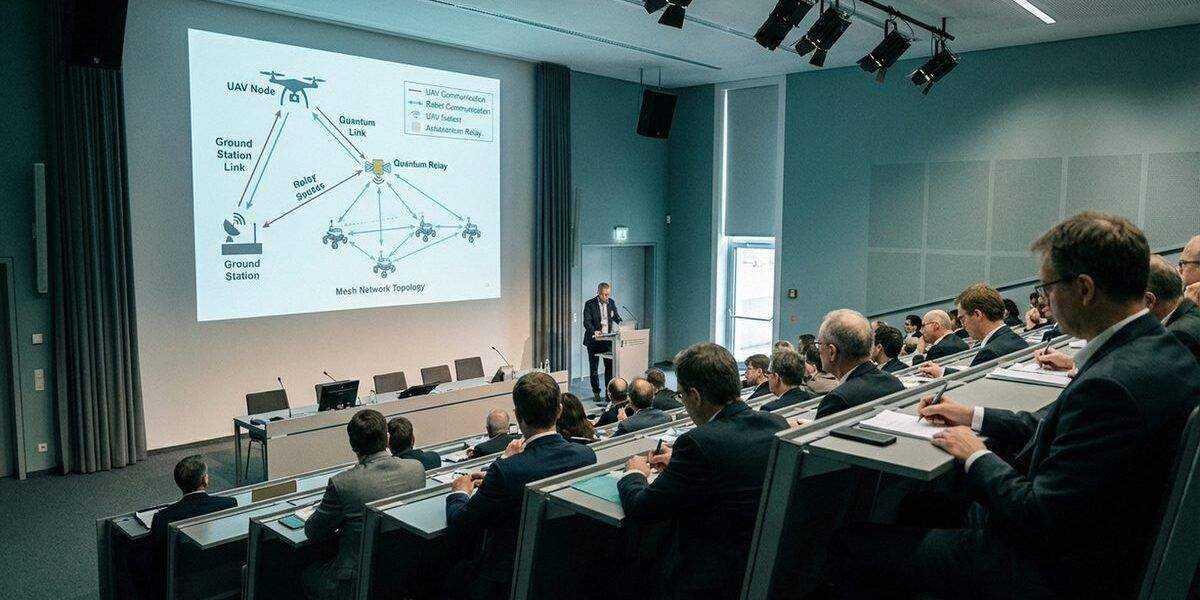
- A wireless mesh network — using IEEE 802.11 (Wi-Fi) access points distributed across the operating area. The mesh topology provided redundancy: if one access point failed or was obstructed, traffic could route through alternative nodes.
- A cellular fallback — GPRS/UMTS connectivity as a secondary link when the mesh network was unavailable.
- Quality of Service (QoS) management — a prioritisation scheme that ensured safety-critical data (emergency stops, obstacle alerts) received higher priority than non-critical data (environmental sensor readings, diagnostic logs).
The mesh network was designed to be self-configuring. As robots moved through the town, they could act as relay nodes for each other, extending the network’s coverage. This was an early example of what is now called a mobile ad-hoc network (MANET) applied to service robotics.
Technical Details
The paper described a cross-layer protocol design that optimised handover between access points. As a robot moved from the coverage area of one Wi-Fi node to another, the handover needed to be seamless — any interruption in connectivity could disrupt the robot’s operation.
Fantacci et al. reported handover times of under 50 milliseconds in their experimental setup, which they deemed acceptable for DustBot’s operating speed of approximately 5 km/h. At that speed, the robot traverses only about 7 centimetres during a 50 ms handover — negligible in terms of navigation impact.
The QoS framework assigned traffic to three priority classes:
- Safety-critical — emergency stop commands, collision alerts (highest priority, guaranteed delivery)
- Operational — navigation data, task assignments, telemetry (medium priority)
- Environmental — air quality measurements, diagnostic data (best-effort delivery)
Relevance to Modern Systems
The DustBot communication architecture anticipated several trends that have since become standard in commercial robot deployments:
First, the reliance on mesh networking. Modern robot fleets from companies like Starship and Amazon Scout use dedicated communication infrastructure in their operating areas, supplemented by cellular connectivity. The principle of redundant, self-healing networks remains sound.
Second, the QoS prioritisation. Safety-critical communication channels are now a fundamental requirement for any autonomous system operating near people. The ISO 13482 standard for personal care robot safety explicitly addresses communication reliability.
Third, the concept of robots as network nodes. In dense fleet deployments, robots can relay data for each other, reducing dependence on fixed infrastructure. This is an active research area in drone swarms and multi-robot systems.
The Broader Globecom Context
The 2008 Globecom conference was held against the backdrop of rapid growth in mobile broadband. The first commercial LTE networks were still a year away. The DustBot team’s decision to design a dedicated mesh network rather than relying solely on cellular infrastructure reflected the limitations of the era. Today, with 5G networks offering single-digit millisecond latencies and network slicing for dedicated robot traffic, the communication problem has become significantly more tractable — though not entirely solved in all environments.
Citation
Fantacci, R., Tacconi, D., Mazzolai, B., Mattoli, V., Dario, P. (2008). See also: CORDIS DustBot article. “A Communication Architecture for the DustBot System.” Proceedings of IEEE Global Communications Conference (Globecom), New Orleans, USA.