 DustBot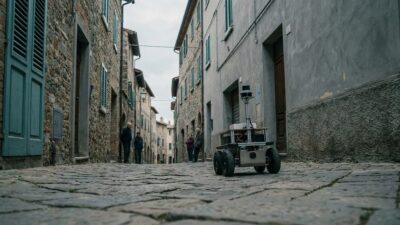
guides
About the DustBot Project: Europe’s First Urban Service Robot Fleet
The complete story of the EU DustBot project: how nine European institutions built the first autonomous urban service robot fleet...
In December 2006, nine research institutions across Europe set out to answer a deceptively simple question: could autonomous robots handle municipal services — waste collection, street sweeping, air quality monitoring — without human operators?
The DustBot project (FP6-045299), coordinated by Scuola Superiore Sant’Anna in Pisa, spent three years building and testing two platforms: DustCart for on-demand waste collection and DustClean for autonomous street sweeping with integrated environmental sensing.
This site documents that project and the broader field it helped define. From differential GPS navigation and gas distribution mapping to the modern delivery robots that inherited its ideas, you will find technical deep-dives, original research summaries, and profiles of the machines that followed.
Read the full project history, explore the technical overview, or start with what service robots actually are.
The DustBot consortium produced over 40 peer-reviewed publications between 2007 and 2010, covering topics from ad-hoc mesh networking to human-robot interaction in public spaces. The research section collects the most significant findings.
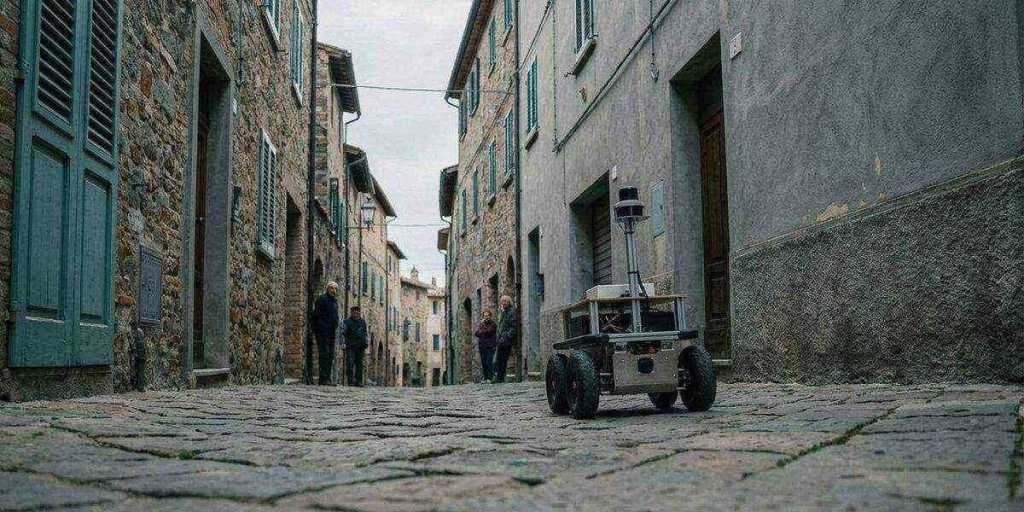
The complete story of the EU DustBot project: how nine European institutions built the first autonomous urban service robot fleet and tested it across four countries.
The complete story of the EU DustBot project: how nine European institutions built the first autonomous urban service robot fleet...
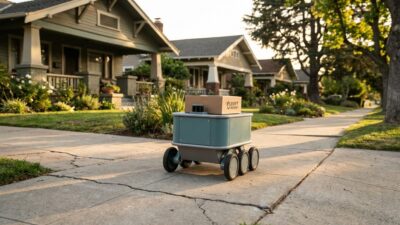
The last mile is logistics' most expensive challenge. Delivery robots from Starship to Nuro are addressing it with technology DustBot...
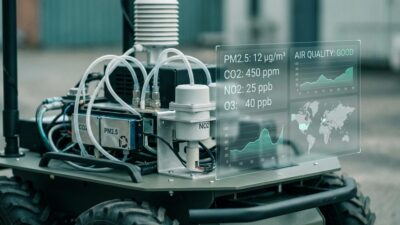
How mobile robots build spatial maps of air pollutants — from DustClean's electrochemical sensor array to the Kernel DM+V algorithm...


